HighLevel is the tool most people mention for database reactivation. Here's a fair look at it, the alternatives, and what owning the system instead looks like.
"GoHighLevel worth it for a small business?"
If you've looked into reviving old leads, you've run into HighLevel. Agencies love it, YouTube is full of "database reactivation" tutorials built on it, and someone has probably offered to set it up for you.
It's a capable tool. Whether it's the right one for a ten-person business is a different question. This guide compares the main ways owners actually do reactivation: texting people yourself, HighLevel, an agency on commission, hiring a caller, and an owned AI system. Fair pros and cons for each.
First, what the tool has to do
Whatever you choose, a reactivation setup needs to handle six jobs:
- Import and clean your old list from wherever it lives.
- Send sequences by text and email, with opt-out handling.
- Reply to answers fast. Firms that contact leads within an hour are over 60 times more likely to qualify them than those that wait a day (HBR, 2011).
- Follow up more than once. 93% of converted leads in one 3.5-million-lead study were reached by the sixth attempt (Velocify, 2012).
- Book appointments or jobs on your calendar.
- Stay compliant: consent records, carrier registration for business texting, honoring STOP.
Judge every option against that list, not against the demo.
Most tools handle the first two jobs well. The real differences show up in jobs three and five: how fast replies get answered and whether a booking actually lands on your calendar without someone retyping it. That's where revived leads are won or lost.
Option 1: gohighlevel vs just texting people myself
Texting yourself from your phone or business line costs almost nothing and feels personal. For a list of 50, it's honestly the best way to start.
Where it falls short: it doesn't scale past a few dozen a day, replies pile up while you're on a job, follow-ups get forgotten, and there's no record of who opted out. Personal phones also aren't set up for business texting rules. Fine for a test; hard to run every month.
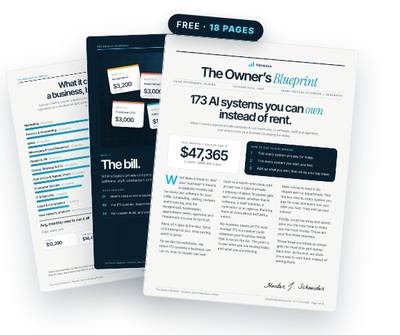
Get the free Owner’s Blueprint
173 systems most businesses rent, what each one replaces, and what it costs a typical 10-person company every month. Tick what you pay for, circle three, and see what owning them would look like.
Download the free Blueprint →Option 2: HighLevel
Roughly what it costs: about $125 a month by our estimate for a typical 10-person company, plus usage fees for texts, calls and email sent through its phone system.
Strengths: it does almost everything: CRM, pipelines, text and email sequences, booking calendars, review requests, websites, AI features, and prebuilt reactivation templates. If you'd use most of that, it's strong value.
Where it falls short for a small business: it was built with agencies in mind, so the interface is big and the learning curve is real. Many owners pay for a full platform and use one or two parts. Setting up campaigns well takes time or a paid setup. And everything you build, your workflows, templates and conversation history, lives inside HighLevel. Leave and you rebuild.
Honest verdict: worth it if you'll make it your main CRM and actually use it. Less so if you only want reactivation.
Option 3: an agency that reactivates leads for a percentage
What it costs: often nothing upfront and a share of the revenue the campaign generates, sometimes with a setup fee. Terms vary a lot.
Strengths: no time from you, and someone experienced writes the messages and handles replies.
Where it falls short: you're paying a cut on customers you already found and paid for. Attribution can be fuzzy: was that booking from the campaign or would they have called anyway? You hand over your customer list. And when the deal ends, the system usually leaves with the agency.
If you go this route, get the percentage, the attribution rules, list ownership and data deletion in writing.
Option 4: hire someone to call old leads
A part-time caller or virtual assistant working the list by phone is another common choice. People are good at this when they're trained and have a script.
The limits are coverage and cost per hour. Calls only happen during their shift, and many people won't pick up an unknown number. A mix works better: a person for the warm replies, automation for the first touch and follow-ups.
What owning the system looks like
The last path is to have the reactivation system built inside accounts you already own: your own CRM or spreadsheet, your own texting and email accounts, and your own AI account to write personalized messages and answer replies.
It does the same six jobs: pulls lapsed customers from your tools every month, segments them, sends the sequence, answers within seconds, books the job, hands hot replies to a person, and logs opt-outs. You pay your own texting and AI usage, as you would on any platform. What you don't pay is a platform fee or a revenue cut, and the system and data stay yours.
Honest trade-off: if reactivation is the only thing you'd own, renting HighLevel or texting yourself may be cheaper. Owning pays off when it replaces several subscriptions you pay for separately: reactivation, follow-up, reviews, booking reminders.
Questions to ask before you sign up for anything
Whichever option you're leaning toward, ask these before you commit:
- Who owns the list and the conversations? Can you export everything, including reply history, at any time?
- What are the usage fees? Platform price is only part of it. Ask what each text, email and phone number costs on top.
- Who answers the replies? A sequence that sends well but replies slowly loses most of its value.
- How is consent tracked? You want a record of how each contact opted in and when they opted out.
- What happens if you stop? Do your workflows, templates and data leave with you, or stay behind?
Good vendors answer these without hesitation. If the answers are vague, that tells you something about what the next few years will look like.
Which one should you pick?
- Under 100 contacts and some time: text them yourself this week.
- You want an all-in-one CRM and will learn it: HighLevel.
- No time at all and fine sharing revenue: an agency, with a clear contract.
- You want it running every month and want to keep it: an owned system.
Whatever you choose, remember the customer side. 75% of consumers say they'd unsubscribe from a business's texts if they got too many (Podium, 2021). The tool matters less than sending fewer, better messages.
Questions owners ask
What is GoHighLevel database reactivation?
It's a common use of HighLevel: importing old leads and past customers, then running automated text and email sequences to restart conversations and book appointments.
Is HighLevel too complicated for a small business?
It can be. It's powerful but built with agencies in mind. If you'll only use reactivation, simpler options may fit better.
Should I let an agency reactivate my leads for a percentage?
Only with a clear written agreement on the percentage, how bookings are attributed, who owns the list, and what happens to your data when the deal ends.
Can I just text my old leads myself?
Yes, for small lists. It's personal and cheap. It gets hard past a few dozen a day and doesn't handle follow-ups or opt-out records well.
Does HighLevel charge extra for texting?
Yes, texts, calls and emails sent through its built-in phone and email system are billed as usage on top of the plan. Check the current rates in your account.
Own the system instead of renting it
Valuexus builds it inside your own accounts, usually within 24 hours, and it stays yours even if you cancel. $450 a month, locked for life; your first month is $225 with code WELCOME50. 7-day, 75% money-back guarantee.
See how Valuexus works →Keep reading
- I'm Texting Customers All Night. Why It Happens and How to Stop
- Customers WhatsApp you all day and night? Here's why it never stops
- Have a list of 3,000 old leads doing nothing? Read this first
- What your old customer list is really costing you every month
- How to revive dead leads this week: texts, emails and a plan
Sources
- Firms that contacted a lead within an hour were over 60 times more likely to qualify it than firms that waited 24 hours or longer — Harvard Business Review (2011), summarized by Ainora
- 93% of converted leads were reached by the sixth call attempt (3.5 million leads) — Leads360/Velocify (2012), summarized by Ainora
- 75% of consumers would unsubscribe from a business's promotional text list if they got too many messages — Podium (2021), via Small Business Trends
- Acquiring a new customer is five to 25 times more expensive than retaining an existing one — Harvard Business Review (2014)
- 64% of consumers want discounts, promo codes and coupons by text from local businesses; 52% want loyalty offers — Podium (2021), via Small Business Trends
Written by Hunter J. Schneider, founder of Valuexus. Get your free 173-point AI audit.