Customers would rather text than call, and they text when you're driving, working or finally home. Here's why the evening inbox never empties and what it's costing you.
"I'm texting customers all night"
You finish the last job, get home, sit down to eat, and the phone buzzes. Then it buzzes again. A quote question. A reschedule. "Are you guys open Saturday?" A photo of a leak.
By the time you've answered everyone, it's 10 p.m. and you've worked a second shift for free.
If you typed "customers text my business line and I can't keep up" into Google, you're not alone, and you're not doing anything wrong. Your customers changed how they reach you. Your setup didn't change with them.
Why customers want to text, not call
Texting is easier for the customer. They can send it from a meeting, the school pickup line or the couch. They can send a photo. They don't have to wait on hold or play phone tag.
Calls are getting harder to complete, too. 48% of consumers never answer calls from unidentified numbers, and another 32% only sometimes do (Hiya, 2025). So when you call back, you often get voicemail, and the conversation moves to text anyway.
And customers want a person on the other end. 74% say they'd be more likely to respond to a business's text if they knew a real person was there (Podium, 2021). That's the expectation you're up against: fast, personal, and at their convenience.
Why the texts pile up in the evening
Here's the mechanism. Customers text when they have a free minute, and their free minutes are your busy ones or your off hours.
In an analysis of 1.69 million online leads, 75% arrived outside weekday business hours, and the busiest hour was 9 p.m. (LeadSync, 2026). During the day you're driving, on a job, or with a client. At night you're the only one who can answer.
Home service owners feel this most: "customers want to text not call and I'm always driving." Salon owners feel it too: "texting customers back takes up my whole evening." The work happens during the day. The texting happens after.
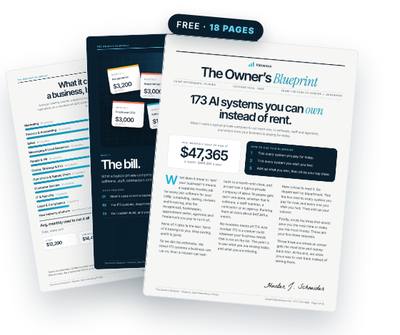
Get the free Owner’s Blueprint
173 systems most businesses rent, what each one replaces, and what it costs a typical 10-person company every month. Tick what you pay for, circle three, and see what owning them would look like.
Download the free Blueprint →What slow replies cost you
A text feels less urgent than a call, so it's tempting to let it sit until tomorrow. The data says that's expensive.
Over 55% of home service customers expect a response within the hour (Jobber, 2026). And 72% of consumers choose the business that responds first (Moneypenny). The customer who texted you at 7 p.m. also texted two competitors. Whoever answers first usually gets the job.
The broader research on lead response says the same thing. Businesses that contacted a lead within an hour were nearly 7 times more likely to qualify it than those that waited longer, and over 60 times more likely than those that waited 24 hours (Harvard Business Review, 2011).
The cost you don't see on a spreadsheet
The other cost is you. An hour or two of texting every night is 7 to 14 hours a week, unpaid, on top of the job.
It also means you're never really off. You check the phone at dinner, at your kid's game, first thing in the morning. You answer from the truck at a red light. That's how owners burn out, and it's not what you started the business for.
There's a quality cost too. Tired replies at 10 p.m. are short, inconsistent and sometimes wrong. You quote from memory, forget to follow up on a photo, or double-book a Saturday slot.
What a good reply actually looks like
It helps to see the difference between a reply that books the job and one that loses it.
The 10 p.m. reply: "Yes we can do that. When works?" Three more texts follow to figure out the address, the problem and the time. By then the customer has booked with someone who answered at 7.
The reply that books: "Thanks for reaching out! Yes, we fix tankless water heaters. Our service call is $89, applied to the repair. I have tomorrow at 9 or 1. Which works, and what's the address?" One message, a clear price, two choices.
Customers respond to clarity and speed. The second reply takes knowledge of your prices, your calendar and your rules. That's exactly what a person forgets at the end of a long day, and exactly what a system can be built to do every time.
Why the usual fixes don't stick
Most owners try three things. An auto-reply that says "we'll get back to you," which buys a few hours but still leaves you replying. A shared inbox app, which organizes the texts but doesn't answer them. Or a virtual assistant, which helps until they're off shift or out sick.
Each one handles a piece. None of them actually has the conversation for you: answering the question, quoting the price you'd give, and booking the appointment.
What fixes it for good
The fix is an AI text agent on your business number that has the conversation the way you would. It knows your services, prices or price ranges, hours, service area and calendar. It answers questions, asks for a photo when it needs one, offers open times and books the appointment.
- Replies in seconds, at 9 p.m. or 6 a.m.
- Answers the common questions the same way every time.
- Books into your real calendar and sends confirmations.
- Hands off to you when a customer needs a judgment call, with the whole thread summarized.
You still see every conversation. You just stop typing most of them.
What your evenings look like when you own it
Picture getting home and finding a summary instead of a pile: six conversations handled, three appointments booked, one quote request waiting on your sign-off, two questions answered.
The key is owning it. A texting agent built inside your own phone and AI accounts keeps your conversations, rules and history with you, not a vendor. You pay your own usage directly, and the system stays yours.
You replace the separate texting and answering subscriptions you pay for with something you own, and you get your evenings back.
Questions owners ask
How do I handle customer texts when I'm busy?
Set an honest auto-reply, batch replies into set windows, and save your common answers as templates. To stop typing most replies yourself, an AI text agent can handle routine conversations and booking.
Is it okay to reply to customer texts the next morning?
Many customers expect a reply within the hour, and most choose whoever responds first. Waiting until morning often means the job is already booked elsewhere.
Will customers know they're texting with AI?
You should tell them. A short line like "this is our virtual assistant, a team member can jump in anytime" is honest and keeps trust.
How do other owners handle customer texts after hours?
Most use some mix of an auto-reply, next-morning catch-up and answering at night themselves. The owners who stop texting at night either hand it to staff on shifts or to an AI agent that replies and books in real time.
Can an AI text agent send photos or quotes?
It can ask for photos, give the prices or ranges you approve, and pass anything that needs a custom quote to you with the details collected.
Get the free Owner’s Blueprint
173 systems most businesses rent, what each one replaces, and what it costs a typical 10-person company every month. Tick what you pay for, circle three, and see what owning them would look like.
Download the free Blueprint →Sources
- 48% of consumers never answer unidentified calls and 32% only sometimes do — Hiya, State of the Call 2025
- 74% of consumers would be more likely to respond to a business's text if they knew a real person was on the other end — Podium Local Business Messaging Trends 2021, via Small Business Trends
- 75% of 1.69 million Facebook and Instagram leads arrived outside Monday-Friday 9-5; the busiest hour was 9pm — LeadSync, summarized by Ainora 2026
- Over 55% of home service customers expect a response within the hour — Jobber survey, cited by Quo 2026
- 72% of consumers choose the business that responds first — Moneypenny, Call Trends
- Firms that contacted a lead within an hour were nearly 7x more likely to qualify it, and over 60x more likely than firms that waited 24+ hours — Harvard Business Review (2011), summarized by Ainora 2026
Written by Hunter J. Schneider, founder of Valuexus. Get your free 173-point AI audit.