Your post worked. Now 140 people commented the word and you're sending the same link one at a time. Here's why that quietly costs you sales, and what the fix looks like.
"People comment link and I have to DM every single one"
You posted a reel. You said "comment GUIDE and I'll send it to you." It worked. Two hundred people commented.
Now it's 10:40 at night and you're on comment 63, pasting the same link, the same two sentences, into the same little box, over and over.
If that's you, you're not doing anything wrong. You did the hard part: you made something people wanted. What's breaking is the part after the comment, and it breaks the same way for almost every owner who tries this by hand.
Why "comment the word and I'll send it" turns into a second job
The keyword trick works because it's low effort for the viewer. One word, no form, no email. That's also why it floods you. The easier you make it to raise a hand, the more hands go up, and every one of them expects a reply from you personally.
Three things make it worse in a small business:
- Comments arrive when you're busy. Social posts get engagement in the evening and on weekends, the same hours you're either working a job, closing up, or trying to be home.
- The platform buries them. Comments, message requests and replies land in different tabs. A comment from Tuesday is easy to lose by Thursday.
- Nothing gets written down. When you DM by hand, nobody records who asked, what they asked for, or whether they ever opened it. The lead lives in your thumb and nowhere else.
So the post that was supposed to bring in customers ends up producing a backlog you feel guilty about.
Speed is the whole game, and hand-DMing loses it
Here's the uncomfortable part. A comment is a lead, and leads go cold fast.
In a Harvard Business Review audit of 2,241 US companies, only 37% replied to a new web lead within an hour, 23% never replied at all, and the average first response took 42 hours (Harvard Business Review, 2011). Companies that reached a lead within an hour were nearly seven times more likely to qualify it than ones that waited just an hour longer.
Older research from MIT and InsideSales found the odds of even reaching a lead drop about 100 times when the reply comes at 30 minutes instead of 5 (MIT / InsideSales, 2007). Those studies were about web forms and calls, not Instagram, but the mechanism is the same: attention is a few minutes wide.
When you DM 200 people by hand, the first ten hear back fast. Number 150 hears back tomorrow, after they've watched forty other reels and forgotten why they typed the word.
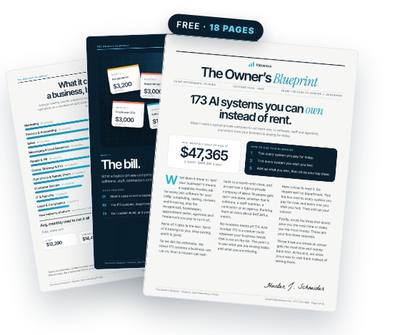
Get the free Owner’s Blueprint
173 systems most businesses rent, what each one replaces, and what it costs a typical 10-person company every month. Tick what you pay for, circle three, and see what owning them would look like.
Download the free Blueprint →Your commenters are online when you're not
An analysis of 1.69 million Facebook and Instagram lead-ad leads found 75% arrived outside Monday through Friday, 9 to 5. The single busiest hour was 9pm (LeadSync, 2026).
That's lead ads, not comments, but it's the same audience on the same apps. Your people scroll after dinner and on Sunday afternoon. If replies only go out when you sit down with your phone, most of them wait.
And they don't wait for you specifically. Moneypenny reports that 72% of consumers choose the business that responds first (Moneypenny). On a feed full of competitors making the same offer, "first" is often measured in minutes.
What it's really costing you
Add it up for a normal week. A post that pulls 150 comments at roughly 30 seconds per hand-sent DM is over an hour of copy-paste, and that's if you never get distracted, never answer a follow-up question, and never miss one.
The time is the smaller cost. The bigger costs are the ones you can't see:
- The commenters who got the link a day late and never clicked.
- The ones who replied with a question ("does this work for a two-person shop?") that you never saw because it landed under a pile of new comments.
- The fact that you have no list. Two hundred interested people, and next month you can't reach a single one of them on purpose.
That last one stings the most. You did the marketing, and you have nothing to show for it once the post scrolls away.
"Does comment to DM actually get sales or just followers?"
Fair question, and it gets asked in every owner group. The honest answer: comment-to-DM gets you conversations. Whether those turn into sales depends on what happens next.
If the DM just drops a link and goes silent, you'll get clicks and some follows. If the DM asks one qualifying question, routes the serious answers to a person, and records everyone for a later follow-up, you've built a small sales pipeline out of a post.
The keyword is the hook. The system behind it is what pays.
What the fix actually looks like
A comment-to-DM system watches your posts for the keyword. The moment someone types it, they get your message and link, usually within seconds, at 9pm on a Saturday the same as 10am on a Tuesday.
A good one goes further than the rented tools most owners start with:
- It handles typos and close matches, so "gide" and "Guide!!" still get the link.
- It asks one useful question in the DM, like what kind of business they run, so you know who's worth a personal follow-up.
- It writes every person into your own CRM or spreadsheet with the post they came from.
- It hands anything unusual, like a real question or a complaint, to you instead of auto-replying.
Then your job shrinks to the part that needs you: talking to the handful of people who are ready to buy.
Rent it or own it
The usual route is a subscription tool. They work, and for one account they're not expensive. The catch is that the flows, the keyword list and often the contact data live inside someone else's product, and they're one more login, one more bill and one more thing disconnected from the rest of your business.
The other route is to own the system: built with your own AI, in your own Meta business account, writing into your own CRM, and yours to keep. That's the approach in The Owner's Blueprint, which lists this system alongside 172 others most businesses rent.
Either way, stop hand-DMing. The people commenting on your posts are telling you exactly what they want. The only question is whether they hear back while they still care.
Questions owners ask
Is it against Instagram's rules to auto-DM people who comment?
Not when it's done through Meta's official messaging tools and the person commented first. Meta limits how and when businesses can message people, and approved tools work inside those limits. Avoid unofficial bots that log in as you.
Will automated DMs feel spammy to my followers?
Not if the message is what they asked for, arrives right away and sounds like you. Spammy is sending things nobody requested. Answering a comment with the link they typed a word to get is just good service.
How many comments make automation worth it?
If you're regularly sending the same link to more than a couple dozen people per post, or replies are going out hours late, it's already worth it. The value is in the speed and the list, not only the time saved.
Does this work on TikTok too?
TikTok's official options for automated DMs are narrower and change often. Check what's currently supported for your account before building a funnel around it. Instagram and Facebook are the most dependable today.
Get the free Owner’s Blueprint
173 systems most businesses rent, what each one replaces, and what it costs a typical 10-person company every month. Tick what you pay for, circle three, and see what owning them would look like.
Download the free Blueprint →Keep reading
Sources
- Only 37% of 2,241 US companies answered a web lead within an hour; 23% never answered; average first response was 42 hours — Harvard Business Review (2011), as summarized by Ainora
- Firms that contacted a lead within an hour were nearly 7x more likely to qualify it than firms that waited an hour longer — Harvard Business Review (2011), as summarized by Ainora
- Odds of contacting a lead drop 100x when the reply comes at 30 minutes instead of 5 — MIT / InsideSales Lead Response Management Study (2007), as summarized by Ainora
- 75% of 1.69 million Facebook and Instagram lead-ad leads arrived outside Monday-Friday 9-5; the busiest hour was 9pm — LeadSync (vendor), as summarized by Ainora, 2026
- 72% of consumers choose the business that responds first — Moneypenny (answering service vendor)
Written by Hunter J. Schneider, founder of Valuexus. Get your free 173-point AI audit.